The arrival of fall brings with it a noticeable shift. The air becomes crisp, the light fades earlier, and there’s a certain restlessness that creeps into our routines. In the ancient Vedic system of Ayurveda, this seasonal transition—the period from late fall into early winter—is known as Vata season.
Vata is composed of the elements Air and Space. When nature’s Vata increases, it stirs up the corresponding qualities in us: cold, dry, light, rough, and mobile.
This manifests as common seasonal complaints: dry skin, erratic digestion (gas, bloating, constipation), restlessness, anxiety, difficulty sleeping, cold hands and feet, and scattered focus. The movement of Vata is necessary, but when out of balance, it feels like we’re literally running on empty, tossed about by the wind.
The solution, according to Vedic principles, is to introduce foods and routines that possess the opposite qualities: warm, moist, heavy, smooth, and stable.
This is where the pumpkin takes center stage. Forget the sugary lattes; the true power of pumpkin is its ancient, grounding ability to act as the perfect seasonal antidote to Vata aggravation.
the vata problem: why fall requires grounding
Understanding why Vata is so easily aggravated in the fall is key to fixing it.
- Dryness: The air turns dry which can create dryness in the body. This could show up as dry, hard stools and constipation, or dry skin and hair.
- Coldness: The temperature drops. Vata is cold, and this external coldness chills the body, slowing down circulation and making us feel perpetually cold.
- Lightness & Mobility: The leaves are flying, the weather is erratic, and the nervous system follows suit. This can result in anxiety, worry, racing thoughts, and poor quality sleep.
When Vata is high, our Agni (digestive fire) becomes variable and unreliable, like a flickering candle, making heavy, cold, or raw foods difficult to digest.
pumpkin: a vata antidote
Fortunately, nature gives us the antidotes to balance the energies of each season. Pumpkin’s properties—both physical and energetic—are tailor-made to pacify aggravated Vata.
heavy and dense
Vata is light and airy. Pumpkin is heavy and dense.
Practical Effect: Eating pumpkin promotes a feeling of satiety, stability, and grounding, which can quell anxiety, calm a racing mind, and anchor the nervous system, leading to better focus and less restlessness.
sweet taste
Ayurveda recognizes six tastes, and the Sweet taste (when naturally occurring, not refined sugar) pacifies Vata. Pumpkin is naturally sweet.
Practical Effect: The sweet taste is nourishing to the tissues, helps rebuild energy (especially after the high activity of summer), and is naturally moistening. This counteracts the dryness of Vata, lubricating the internal channels and promoting healthy movement in the bowels.
cooling
The key to mindful Ayurvedic preparation is to add spices to counteract your imbalances. Pumpkin has a cooling energetic post-digestive effect. This cooling quality is excellent for balancing Pitta (fire/inflammation) but can dampen the already weak and fluctuating Vata Agni (digestive fire).
Practical Effect: Always consume cooked and warm pumpkin, and it helps to add warming spices like ginger, cinnamon, and nutmeg. These spices are not just for flavor; they kindle your digestion, ensuring that the cooling, heavy pumpkin is broken down properly. This prevents the very gas, bloating, and sluggishness that we are trying to avoid.
four vata pacifying effects of pumpkin
1. digestive grounding
Pumpkin is a fantastic source of soluble fiber, but for Vata, it must be cooked thoroughly. Raw vegetables are rough, cold, and light—all Vata-aggravating qualities.
- Practical Action: Choose roasted, baked, or steamed pumpkin over raw preparations.
- Spice Synergy: To ensure this heavy food digests properly and to counteract its naturally cooling virya (energetic effect), it must be paired with warming spices that kindle Agni. Think: cinnamon, ginger, and nutmeg. These spices break down the density of the pumpkin and provide the necessary internal warmth, ensuring it nourishes you without causing heaviness or gas.
2. nervous system nurturing
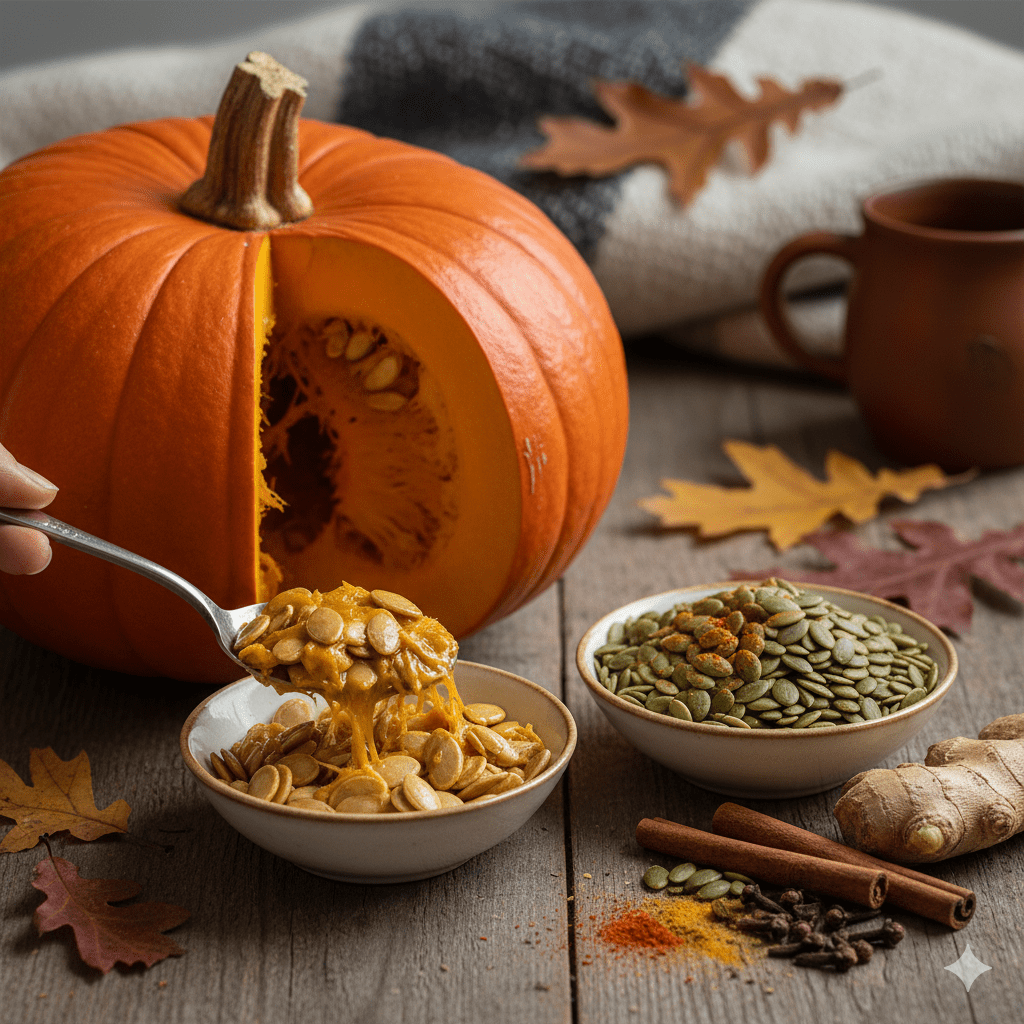
Vata imbalance affects the nervous system as well, leading to racing thoughts and poor sleep. The heavy quality of pumpkin can calm the nervous system, as can pumpkin seeds.
- Practical Action: Snack on a small handful of roasted pumpkin seeds (also known as pepitas). They are rich in magnesium, a critical mineral for muscle relaxation and nervous system health, and tryptophan which gives that Thanksgiving nap effect.
- Routine: A few roasted seeds with dinner or as a small snack 30 minutes before bed could improve sleep.
3. deep tissue hydration
The dryness of the fall air affects every layer of your body, from your skin to your joints. While we typically think of water, oil is most effective at combating Vata.
- Practical Action: Cook your pumpkin with ghee or a good quality olive oil. The healthy fat adds the necessary oil to the pumpkin, making it perfect for nourishing and lubricating dry joints, dry internal membranes, and dry skin from the inside out.
4. mineral replenishment
High Vata can lead to mineral depletion and exhaustion.
- Practical Action: Roast and consume the pumpkin seeds. They are dense with zinc, potassium, and magnesium. These minerals are essential for regulating energy, balancing electrolytes, and preventing the minor aches and cramps often associated with Vata imbalance. It’s a natural way to fortify the body’s reserves as the energy-intensive season progresses.
Are you ready to stop battling the restless, dry energy of fall and start feeling grounded, calm, and nourished? Start incorporating cooked, spiced pumpkin into your fall routine and notice the direct, calming effect on your digestion, your energy, and your quality of sleep.
 Vedic Charioteer
Leave a comment